
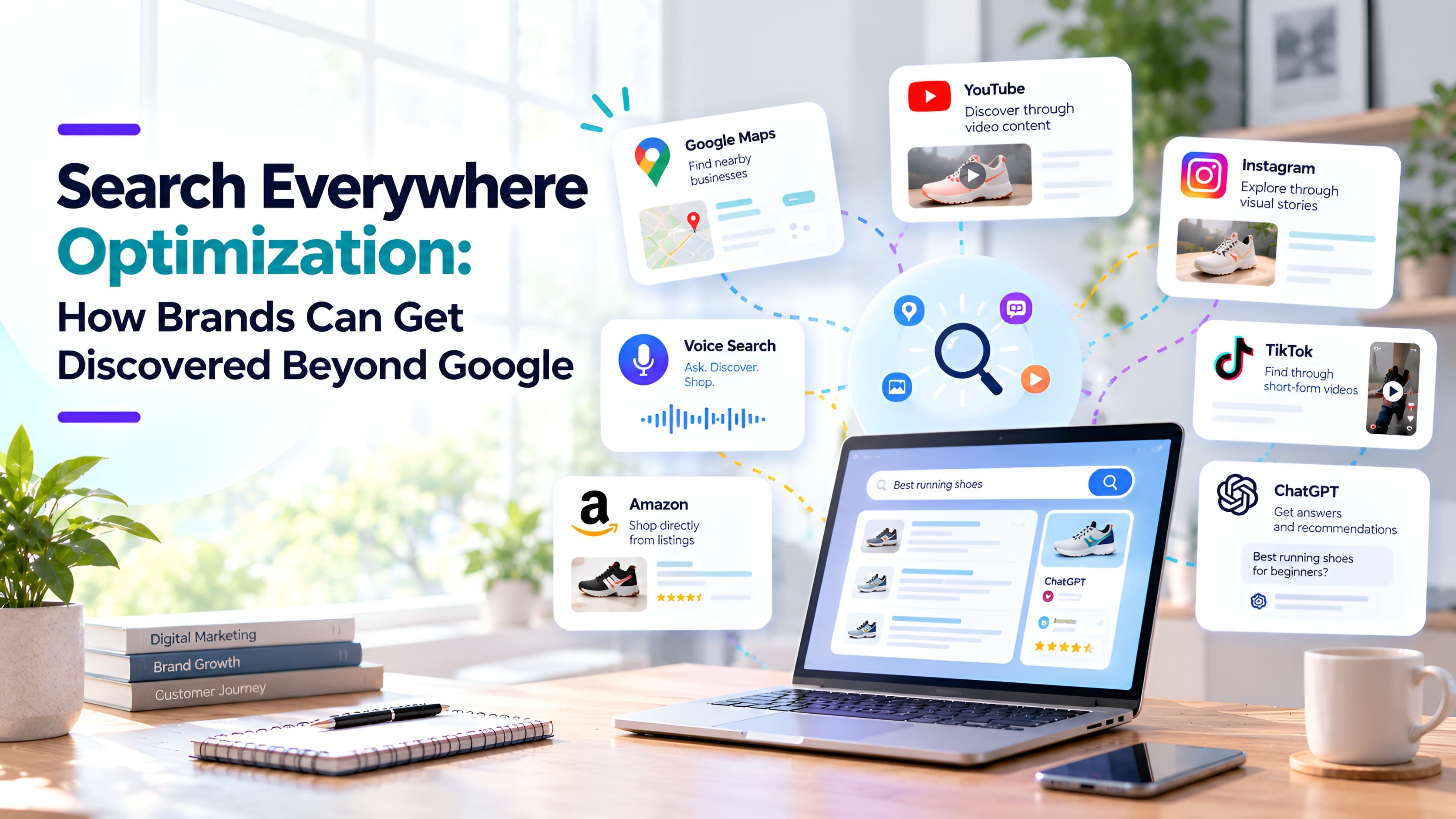
A business owner begins researching accounting software. They view a comparison on YouTube, read the comments on Reddit, and check the recommendations on LinkedIn and ask an AI assistant what it has to offer.
Once they've reduced their options they go to Google and look for a specific brand.
This journey reflects changing digital discovery habits. Customers can learn about businesses on many platforms, without even visiting the businesses' website.
Search everywhere optimization is helping brands do this, by optimizing themselves where their target audiences are searching for products to compare services and for recommendations.
The goal isn't to give up on conventional SEO or to keep profiles on all sites. It's important that you know where consumers are going to find information and that you produce helpful information that they are able to use to find and assess your business.
While Google remains a key discovery platform, social, video, online communities and AI are all other areas where consumers are seeking information.
Think of an online visitor who's looking for wireless headphones. They may find out about a product via Instagram, see a video review on YouTube and learn about reviews from customers before looking for the retailer.
B2B buyers can engage in discussions on LinkedIn, read articles in industry publications, visit software review websites and network with other professionals in their fields.
Each interaction can influence which brands customers consider.
This is an important question for marketers: Where is your customer's initial decision and are you there?
Each customer has his/her own platform. It is important for businesses to know these distinctions in developing content.
|
Platform |
Customer intent |
Suitable brand content |
|
Google Search |
Find information and compare solutions |
SEO blogs, service pages and guides |
|
YouTube |
Understand products through demonstrations |
Tutorials, reviews and explainers |
|
|
Explore products and visual ideas |
Reels, showcases and creative posts |
|
|
Research professional solutions |
Expert insights and case studies |
|
Reddit and forums |
Explore real experiences and opinions |
Helpful, transparent participation |
|
AI assistants |
Ask questions and compare options |
Clear, credible website information |
|
Google Maps |
Discover nearby businesses |
Accurate profiles and genuine reviews |
Not all platforms are created equal. A manufacturing firm might seek relevant opportunities in LinkedIn and industry publications, while a fashion company could find opportunities in Instagram and YouTube.
The platform should be selected according to the audience.
Let's assume that a customer is considering buying a new kitchen.
They jot down concepts on Instagram, view how things are done with appliances on YouTube and read about installation experiences in forums.
At later stages they look up local suppliers on Google and compare the shortlist of businesses.
Each time the customer has been served with different content.
Rather than viewing each platform as a new marketing opportunity, it's a fantastic marketing strategy to connect all of these interactions.
This way, you're able to have a goal for every channel.
Analyse customer questions, website traffic, social media interactions and sales interactions.
Inquire from customers about where they heard about your business and what sources made an impact on them making their decision.
These are insights that can identify platforms that should be pursued on the basis of more than assumptions.
The same message sent via various platforms may have little or no value.
A detailed guide to the website could be a YouTube video, Instagram carousel or LinkedIn post.
However, each version needs to cater to the presentation requirements of the platform as well as the needs of the audience.
For example, a digital marketing agency may publish a blog post on their website on a problem they are encountering with lead generation, and share the consequences of the problem on LinkedIn.
The core message remains consistent, the experience is different.
Your customers ought to find trustworthy information anywhere they come across your company.
Review the following information:
Having accurate and detailed Google Business Profile details can help local businesses be found in Google Search and Google Maps.
Customers are more likely to read reviews and the community conversation as it gives them a better idea of what the brand has to offer compared to ads.
Companies can take part by answering pertinent questions, sharing knowledge and professionally responding to feedback.
Never trick people into promotions, fake reviews or manipulate community conversations.
Brands that post content that is relevant and of value establish their credibility.
If discovery begins elsewhere, that doesn't matter, your website is important.
Consumers have to have somewhere to go and find information, conduct research and take meaningful action.
Google's advice for AI-powered Search continues to be based on tried and tested SEO techniques that include delivering trustworthy content and making it accessible.
Headings, original explanations and technically accessible pages aid discoverability but cannot ensure that AI-generated recommendations are accurate.
Measuring search everywhere optimization requires more than checking website rankings.
There can be a number of sources along the way before a customer completes an enquiry or purchase. Using traditional last click attribution may prevent them from gaining credit for earlier interactions.
A broader measurement perspective is a platform engagement and business outcomes combination.
|
Measurement area |
Useful indicators |
|
Brand awareness |
Branded searches and relevant mentions |
|
Content engagement |
Video watch time, saves and interactions |
|
Website discovery |
Referral traffic and engaged visits |
|
Customer interest |
Enquiries and qualified leads |
|
Business outcomes |
Conversions and customer acquisition trends |
Businesses may additionally ask consumers the place they noticed the brand for the first time.
These insights are just to provide context and not assume all mentions and engagements led to conversions.
Trying to appear everywhere: Maintaining too many channels can reduce content quality. Prioritise platforms with clear audience relevance.
Treating every platform like Google: YouTube viewers, LinkedIn professionals and Instagram users often expect different content experiences.
Ignoring business outcomes: Impressions and engagement are useful indicators, but they should be evaluated alongside enquiries, conversions and customer quality.
It's usually easier to concentrate on one or a few new platforms than to spread resources thin.
There are a number of points of contact in today's brand discovery, but the company doesn't have to pursue each platform.
Instead, it is better to be aware of and share the appropriate customer journeys along with maintaining consistency in the brand touchpoints.
Even the traditional SEO remains at the heart of the business and other discovery methods can be employed for engaging customers throughout the buying cycle.
At GBIM, we can help businesses make SEO, content marketing, social, and digital strategy work for their business. We are not aiming to improve "customer visibility" but "relevant" customer engagement will be made easier through a more effective online reputation.
It is a digital marketing approach focused on improving brand discoverability across relevant search engines, social platforms, video websites, online communities and AI-powered tools. The objective is to reach customers wherever they research and evaluate products or services.
Yes. Traditional SEO remains important for website visibility, organic traffic and customer discovery. A broader cross-platform strategy complements existing SEO efforts rather than replacing them.
Businesses should prioritise platforms where their target audiences actively research products, compare services and seek recommendations. Customer research, referral traffic and enquiry patterns can help guide platform selection.
Yes. Relevant social content can introduce businesses to potential customers and encourage further exploration. However, visibility depends on platform behaviour, content relevance and audience engagement.
Brands should maintain accurate information, publish useful original content and follow established website SEO practices. These measures support discoverability but do not guarantee that an AI assistant will recommend or cite a particular business.
Businesses can review branded searches, referral traffic, content engagement, qualified enquiries and conversions. Customer feedback and discovery surveys can also help explain how different platforms influence purchasing decisions.
309, Rupa Solitaire,
Sector-1, Millennium Business Park,
Mahape, Navi Mumbai,
Maharashtra (400 710), INDIA.
Write to us at
hr@gbim.com