
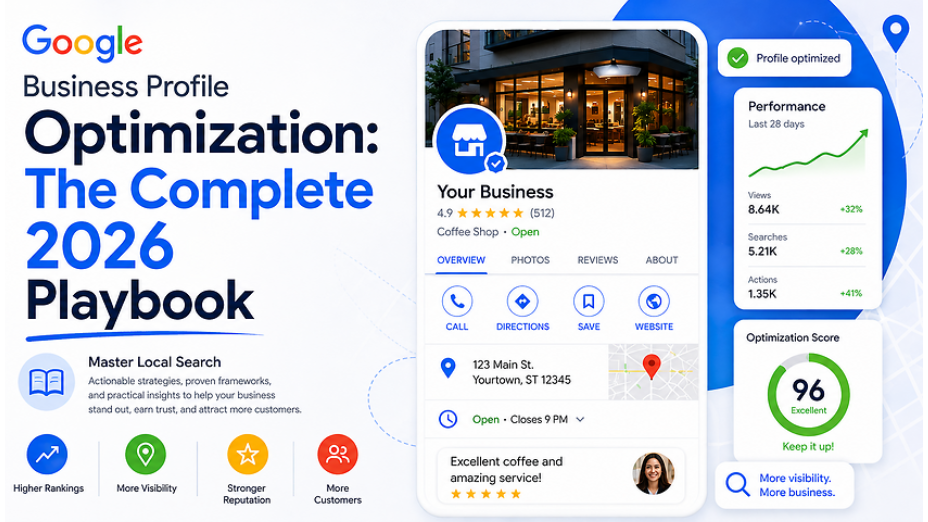
Learning how to rank higher on Google Maps is the single most effective strategy for local businesses, service providers, and multi-location brands seeking high-intent local customers. Google Business Profile optimization transforms a basic map listing into a primary lead generation engine by placing your brand directly into the Google Maps Local Pack. If you want to outrank local competitors, increase inbound calls, and drive consistent foot traffic to your physical storefronts, you are in the right place. This guide delivers a step-by-step 2026 strategy to maximize your local search visibility and dominate map rankings.
Google evaluates three fundamental criteria when deciding which business listings appear at the top of local map searches. Understanding these factors allows you to refine your profile strategically rather than making uneducated guesses.
Relevance reflects how accurately your Google Business Profile matches the searcher's intent. If your profile lacks detail, accurate categories, or specific service descriptions, search engines cannot comfortably connect your business to target local queries.
Distance refers to the physical location of your business relative to the person searching or the location named in the search query. While you cannot physically relocate your storefront, optimizing your service area settings ensures you capture prospective customers across your entire operating boundary.
Prominence measures how established and trustworthy your business appears across the web. Google determines prominence through Google reviews, star ratings, local media mentions, authoritative regional backlinks, and strict NAP consistency across business directories.
Before launching advanced campaigns, your base listing information must be complete and accurate. Inconsistent data confuses both search engines and potential buyers.
Your primary category carries more ranking weight than almost any other profile field. Choose the category that reflects your core revenue generator rather than secondary offerings.
Your listing title should match your legal business name and physical signage word-for-word.
Write a concise, engaging business overview within the 750-character limit. Highlight key services, geographic boundaries, and core value propositions. Incorporate natural keywords related to how to rank higher on Google Maps in the opening lines. Activate relevant profile attributes such as wheelchair access, on-site services, or appointment requirements to surface in filtered searches.
Once your basic profile is verified, executing a proactive local SEO strategy will separate your listing from passive competitors.
Customer feedback directly influences your profile prominence and conversion rate. While total review volume is important, review velocity and recency play an equally critical role in local map positions.
Treat your profile as an active communication channel. Frequent activity demonstrates to Google that your business is operating and actively engaging with customers.
The native Q&A module allows prospective clients to submit questions directly on your public listing.
Your map listing does not work in total isolation. Search engines compare your profile data against your linked website landing page to confirm business legitimacy.
|
Technical Focus Area |
Strategic Implementation |
Direct Business Impact |
|
Landing Page Alignment |
Link your profile directly to a location landing page with identical NAP details. |
Strengthens relevance for localized organic and map searches. |
|
Local Schema Data |
Implement LocalBusiness structured markup within your website header. |
Clarifies address data, operating hours, and geo-coordinates for search crawlers. |
|
Localized Content |
Publish local case studies, community involvement posts, and regional service pages. |
Expands semantic coverage across nearby geographical queries. |
|
Local Backlink Profile |
Earn links from regional business associations, local news sites, and industry partners. |
Boosts overall domain authority and map prominence rankings. |
Small mistakes can cause significant drops in your map rankings. Protect your listing by avoiding these common mistakes:
Achieving top map positions requires ongoing profile monitoring, content optimization, and strong technical execution. We at GBIM specialize in turning local search traffic into valuable business opportunities.
Our team helps companies build sustainable market leadership through targeted SEO services designed to raise keyword rankings, optimize Google Business Profiles, and expand regional authority. Whether you manage a single storefront or operate a multi-location network, our services support your ongoing growth by building verified local citation networks and structuring optimized landing pages.
By pairing specialized profile optimization with our full suite of digital marketing services, we ensure your business attracts qualified local buyers, drives inbound phone calls, and delivers measurable marketing performance. Visit GBIM to learn how we can strengthen your local online presence.
Most optimized profiles begin seeing measurable ranking improvements within 4 to 8 weeks, depending on local competition and review frequency.
Yes, service-area businesses can hide their home or office address while defining specific geographic zones where they deliver services.
Embedding a Google Map on your contact or location page helps search engines verify your physical address and strengthens local relevance signals.
Unplanned ranking drops usually stem from new local competitors, profile suspensions, duplicate listings, or sudden NAP inconsistencies across directories.
Select your single most accurate primary category, followed by two to five secondary categories that describe your additional services directly.
309, Rupa Solitaire,
Sector-1, Millennium Business Park,
Mahape, Navi Mumbai,
Maharashtra (400 710), INDIA.
Write to us at
hr@gbim.com