
Posted three times one week, then went quiet for ten days? And wondered why your reach tanked right after?
That's posting frequency doing its thing. This guide breaks down real numbers for every platform that matters in India, based on what actually performs, not some random figure someone made up on the internet. Brand page, personal account, or client socials, this one's for you.
|
Platform |
Ideal Frequency |
Why |
|
|
3-5 feed posts/week + daily Stories |
Rewards consistency + Reels get pushed hardest |
|
|
3-4 posts/week |
Organic reach is low, quality over volume |
|
|
2-4 posts/week (business) |
Rewards early engagement, not spam |
|
X (Twitter) |
1-3 posts/day |
Content dies fast, needs volume to stay visible |
|
YouTube |
1-2 videos/week or weekly Shorts |
Quality beats daily rushed uploads |
These are starting points, not rules. What works for a streetwear brand won't work the same for a B2B SaaS company. Find your rhythm, one you can actually sustain.
Here's the part nobody tells you straight up: dumping five posts a week doesn't guarantee anyone sees them.
Platforms reward engagement, not volume:
Post daily with weak content, and the algorithm quietly shows you to fewer people. It's not personal, it's just math.
We've watched this play out constantly. A brand posting every single day with generic captions gets outperformed by a smaller account posting three times a week with content people actually stop scrolling for.
The takeaway: two genuinely good posts beat four rushed ones, every time.
A café's audience checks Instagram daily for food shots. A logistics company's LinkedIn audience checks in twice a week during work hours. Match your frequency to your audience's real behavior, not a generic blog average.
Be honest. A rushed, low-effort post does more damage than skipping a day, because it drags your engagement average down and platforms notice that.
Still figuring out where to focus? Check our breakdown on choosing the right social media platform for your business.
Instagram
Mix your formats. 3-5 feed posts a week + regular Stories keeps you visible without exhausting your audience.
Facebook
Organic reach here has dropped hard over the years.
LinkedIn
Business pages do well with 2-4 posts a week.
X (Twitter)
Tweets basically vanish within hours.
YouTube and Shorts
Long-form doesn't need to be frequent to work.
Follow these five steps, in order:
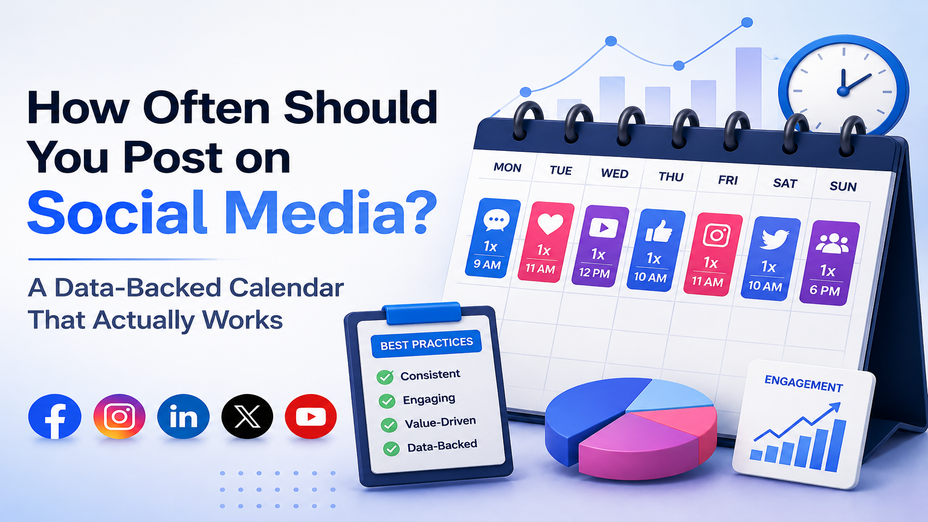
This is basically what a strong social media content calendar does. Removes the guesswork, replaces it with a system you can repeat. It's exactly what we build into every social media marketing strategy we run.
Getting frequency right is one piece of the puzzle. It has to work alongside good content, the right platform picks, and actually knowing your audience.
Our team at GBIM has spent years running social media marketing for brands across industries. One thing stays true every time: accounts that treat their calendar as something living and data-driven consistently outperform ones chasing random posting targets.
We build calendars around what your audience actually responds to, then keep adjusting as the numbers roll in.
There's no single magic number for how often you should post on social media. What matters is building a rhythm that fits your platform, your audience, and what you can actually sustain, then sticking with it long enough to see results.
We at GBIM help brands do exactly this: custom content calendars, platform-specific strategies, constant refining based on real engagement data. So you're never left guessing what to post or when. Want a second opinion on your current schedule? We're happy to take a look.
Is posting every single day a good idea?
Only if every post is genuinely good. Daily posting with weak content hurts more than it helps.
How many times a week should a small business post on Instagram?
3-5 feed posts a week, backed by regular Stories.
Does posting frequency really affect the algorithm?
Yes, but engagement matters more than volume. Steady posting with strong engagement wins almost always.
Should I post the same content everywhere?
No. Every platform has its own audience and algorithm quirks. Adapt, don't copy-paste.
What's the best time to post?
Depends on platform and audience, but early mornings and evenings work well for most brands. Check your own analytics for the real answer.
How do I know if I'm posting too much?
Watch engagement over a few weeks. A steady drop despite consistent posting usually points to fatigue, not frequency alone.
Does a content calendar actually make a difference?
Yes. Planning ahead keeps quality and rhythm consistent, both tied directly to long-term growth.
309, Rupa Solitaire,
Sector-1, Millennium Business Park,
Mahape, Navi Mumbai,
Maharashtra (400 710), INDIA.
Write to us at
hr@gbim.com