
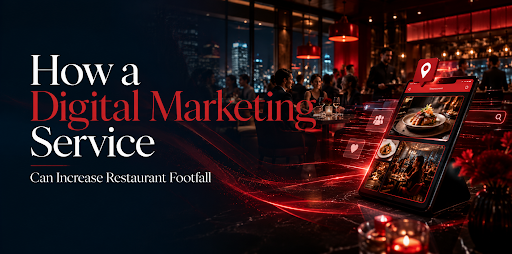
Today, competition among restaurants goes beyond positive reviews and excellent food products. Potential diners will learn about the existence of a certain place through online search, recommendations from food-related social media pages, suggestions based on location, and finally, food delivery applications, even before they head out to try a new restaurant. The change in consumer behavior has resulted in online visibility becoming a key consideration in choosing where to have dinner. A professional digital marketing service can help restaurants establish visibility, attract local customers, and leave an impression that makes them come back for more.
Whether a small cafe, a family restaurant, or a fine dining restaurant, digital marketing allows companies to reach out to consumers when it matters. Instead of using only conventional marketing, restaurants can now get in touch with consumers through various digital channels.
Most consumers conduct online research before selecting a place to dine. The reasons behind this include reading reviews, looking through menu options, evaluating ratings, and viewing pictures before booking a table or visiting a restaurant.
If a restaurant fails to turn up on search results or social media, the consumer may not think of them ever at all. For this reason, the importance of online presence for any restaurant cannot be overlooked.
Some advantages of online presence for restaurants include:
Digital marketing ensures that the customer has several touchpoints where they learn about and connect with the restaurant.
One of the greatest benefits of digital marketing lies in local marketing. Restaurant owners rely on local customers, so local marketing will be highly beneficial for their promotion.
When people use search engines to find local businesses like “restaurants near me” or “best cafés nearby,” they prefer local search listings that are optimized.
Restaurants can improve visibility by:
A complete and optimized online profile helps customers trust the business before visiting.
Location-based advertisements help restaurants reach people located within a certain radius. The concept is more applicable when promoting lunches, weekends, and seasonal campaigns.
For instance, people going to work in an office located just a couple of kilometers away could be exposed to lunch deals during work time, while parents living nearby would see dinner deals during evening time.
The approach will ensure that visitors will walk into the restaurant rather than wasting time on the wrong audience.
Food is highly visual-oriented, which makes social media the ideal platform for restaurants.
Social media platforms such as Instagram and Facebook have a profound effect on dining decisions. Many customers visit restaurants because of food-related pictures, customer stories, or popular reels.
Social media can be used by restaurants to:
Regular posting helps customers get familiar with the brand and remember it.
A good digital marketing service not only posts on social media but also manages the entire process of creating content, engaging audiences, and measuring results.
Online reviewing has now emerged as the most powerful influencing factor for customers choosing restaurants.
Many customers usually read reviews before dining at a new place. Good reviews help build trust, whereas quick replies to bad reviews demonstrate professionalism.
Restaurant owners must make sure that customers who had a great time at their restaurants submit honest reviews on sites like Google.
Important review management practices include:
Restaurants should motivate satisfied consumers to write authentic reviews on websites such as Google and restaurant review websites.
Restaurants with useful and interesting content tend to draw more audience attention.
Rather than just posting about their promotion, restaurants can make content based on:
Such content allows restaurants to enhance their brand identity while engaging with their customers.
Moreover, blog articles, videos, and social media posts are instrumental in enhancing search engine optimization for restaurants to feature in related online searches.
Online advertisements offer restaurants the ability to target niche audiences through locations, age, interests, and culinary tastes.
Unlike conventional advertisements, online marketing strategies are more flexible, cost-efficient, and offer quantitative outcomes.
Restaurants can run campaigns for:
Campaigns can be modified in real time in paid advertising. The advantage is that it will help the restaurant maximize its exposure when it needs to do so.
Most clients seek restaurants through mobile phones. Slow loading websites and difficult navigation might cause prospective clients to go for other restaurants instead.
It is important for restaurants to make sure that their websites are user-friendly and compatible with mobile phones.
Some of the key elements that need to be considered on a restaurant website are:
A seamless mobile experience helps customers make quick dining decisions.
Customer retention is equally as important as bringing in new customers.
SMS marketing and email marketing can help in maintaining contact with loyal customers using:
Personalized messaging ensures that loyal customers will visit again and builds relationships with them.
Restaurant owners can also target their customers using information such as their food preferences and ordering history.
Food Influencers and local creators have emerged as key players in making restaurants visible.
When an influencer posts about their experience at a restaurant, they generate curiosity among their followers who want to go there too.
In any case, the collaboration requires being genuine. The restaurants need to concentrate on choosing those creators whose audience aligns with their target customers.
Local micro-influencers may turn out to be more effective than big influencers because of the latter’s non-relevant audience.
The biggest advantage of digital marketing is that it provides measurable data.
Restaurants can track:
This information will help organizations make strategic marketing decisions and operational plans.
For instance, if an advertisement works well on weekends, more money should be allocated for promotions during weekends.
Restaurants today require much more than delicious food to thrive in such a competitive environment. Convenience, visibility, interaction, and credibility come first when making restaurant decisions. Therefore, an intelligent use of digitalization can help the restaurants to interact with their customers at every stage of this process.
All the efforts made by the restaurant online will go into increasing its exposure and bringing more people to dine at its premises. Companies such as GBIM specialize in building online strategies to help businesses grow their online exposure and presence, and companies seeking to enhance their exposure can partner with such companies for better results.
Moreover, using high-quality tactics such as search engine optimization, social media marketing, local SEO services, optimizing Google Business Profile, restaurant marketing tips, online reputation management, and pay-per-click advertising will enhance customer outreach even further. Professional digital marketing services ensure the competitiveness of restaurants in the evolving digital dining world.
309, Rupa Solitaire,
Sector-1, Millennium Business Park,
Mahape, Navi Mumbai,
Maharashtra (400 710), INDIA.
Write to us at
hr@gbim.com